Define the business requirement.
Enter monthly owner pay, overhead, working capacity, reserves, expected fees and one rounding rule.
Turn monthly targets, billable capacity, costs, reserves, scope and discounts into Starter, Core and Premium client quotes.
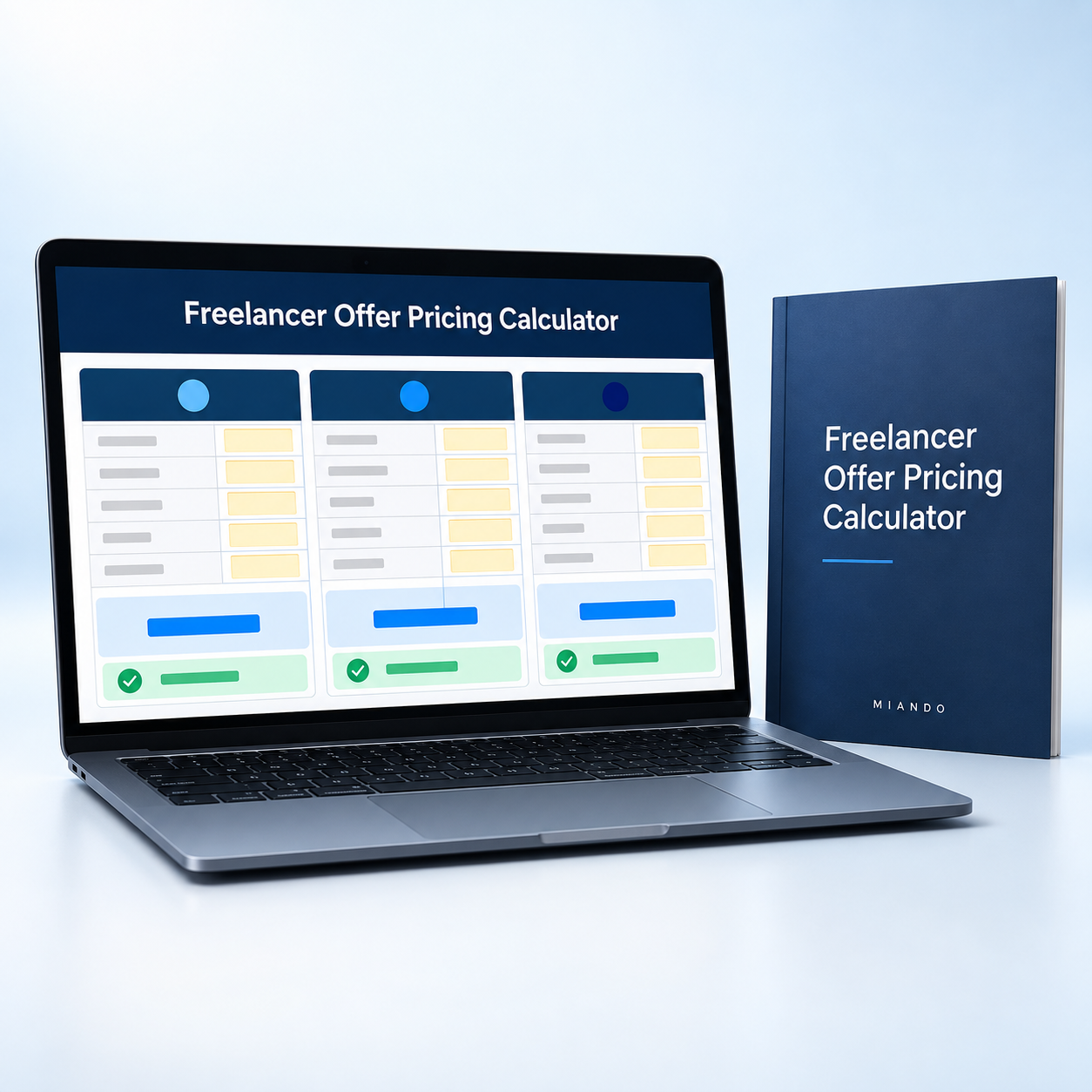
The workbook keeps owner pay, overhead, non-billable time, reserves, direct costs and scope visible so a discount cannot quietly erase the price floor.
Enter monthly owner pay, overhead, working capacity, reserves, expected fees and one rounding rule.
Model delivery hours, direct costs, contingency, value adjustment, discount and included revisions.
See the floor, list price, client quote, maximum discount, projects needed and delivery hours required.
The worked example can be replaced with any consistent currency and a freelancer's real assumptions.
Starter, Core and Premium calculations use one shared monthly business model.
Missing input, invalid assumption, below-floor price and above-capacity workload stay visible.
Formula explanations, scope guidance, discount logic, capacity checks and a proposal checklist.
Read the capacity-first freelance pricing guide for the monthly floor, project formula, discount boundary, capacity checks and official references.
Yes. The currency code is a label. Enter every numeric amount in one consistent currency and do not mix currencies inside the same workbook.
No. Tax reserve is an editable planning input. Local taxable bases, rates and filing rules require qualified advice in the relevant jurisdiction.
No. It estimates sustainability from the assumptions entered. Buyer demand, positioning, proof, scope and sales execution still need real-world validation.
No. The workbook, guide and product page are complete, but its live Stripe product and delivery route are not configured yet.