Servers, components and networks
Typical work can include staging hardware, diagnostics, component replacement, cabling, operating systems, network troubleshooting, decommissioning and documented changes.
First choose the actual work: server hardware, secure inventory or critical electrical and mechanical infrastructure. Then research ten current vacancies, build honest evidence and buy training only when the role repeatedly requires it.
Typical work can include staging hardware, diagnostics, component replacement, cabling, operating systems, network troubleshooting, decommissioning and documented changes.
Typical work can include receiving, identification, chain of custody, stock accuracy, media handling, supplier coordination and audit-ready records.
Typical work can include monitoring electrical, mechanical, HVAC, cooling and control systems. Never claim authorization or perform hazardous work beyond your training and employer procedures.
Check work authorization, transport, on-site expectations, shift patterns and any background or security screening before spending time on a technical gap that is not the real barrier.
Record title, location, employer, duties, minimum qualifications, preferred qualifications, physical conditions and shift language. Separate minimum requirements from preferences.
Hardware roles may repeat repair, Linux or networking evidence. Inventory roles may repeat stock control and secure handling. Critical-environment roles may repeat electrical, mechanical, HVAC, safety or maintenance experience.
Useful evidence can include a photographed PC component inventory, a small Linux installation log, a home-network diagram, a sample troubleshooting ticket, an asset-reconciliation exercise or a written change plan with rollback steps. Label simulations as labs, not production experience.
Buy a course only when the target vacancy repeatedly names the knowledge or credential, the provider and assessment are credible, the cost is proportionate and location, shifts, screening or experience do not remain the stronger blocker.
Tailor the CV to one lane, submit five applications through official employer portals and review responses before sending the next five. Track vacancy IDs and closing dates because listings change.
| Source | Evidence visible now | What it means |
|---|---|---|
| Microsoft Datacenter Careers | Three distinct operations families: datacenter technician, inventory and asset technician, and critical-environment technician. | Choose the work lane before comparing requirements. |
| Microsoft Datacenter Pathways | Potential foundations include IT, electrical, mechanical, HVAC, maintenance, logistics and hands-on learning interest. | Translate existing evidence instead of assuming only one background qualifies. |
| Google Careers | Current technician postings can require hardware or network troubleshooting, physical equipment handling, shifts and role-specific work authorization. | Read the exact vacancy; a general career guide cannot determine eligibility. |
| Amazon Jobs | Current data center operations listings vary by location, level and team. | Use the employer search page and confirm the live posting before applying. |
Choose one lane and region. Collect ten official vacancies and create a repeated-requirements table.
Complete two or three safe labs, write clear troubleshooting notes and tailor the CV to the selected lane.
Send five applications, assess response evidence, close the most frequent gap and then run the second batch.
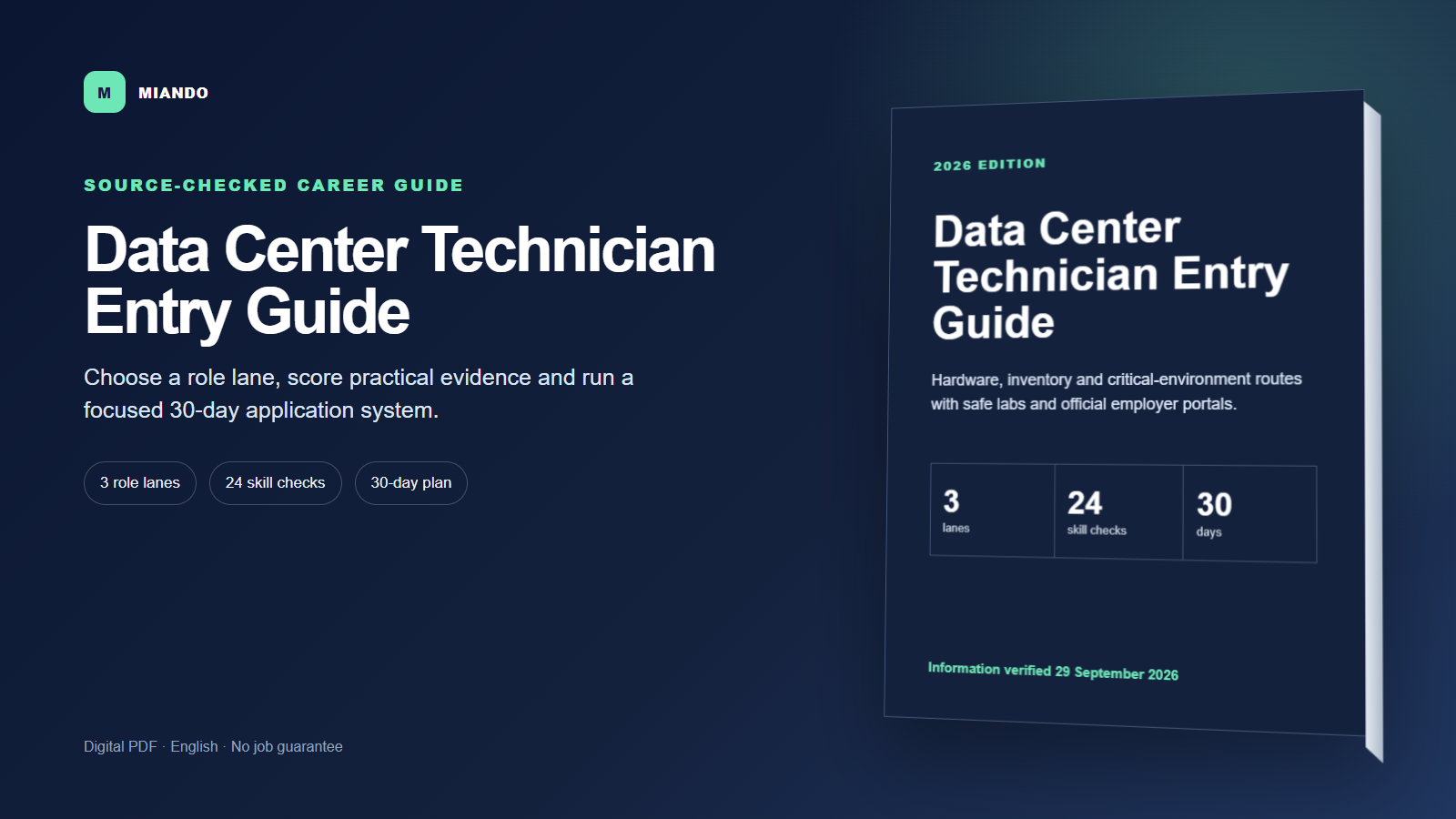
Use the free Excel tracker for 30 official vacancies and 50 applications. The prepared Data Center Technician Entry Guide adds 24 skill checks, seven safe labs, five background-to-role routes, CV patterns, ticket-writing practice, interview prompts and a printable 30-day plan. Checkout is not active; you can review the scope and cast an anonymous launch vote.
Download the free Excel tracker Review the guide and voteSome employers describe pathways from IT support, hardware repair, logistics, electrical, mechanical, HVAC, maintenance or military technical backgrounds. Eligibility still depends on the current vacancy, location, shifts, physical requirements, security screening and work authorization.
There is no universal certificate for every data center role. Compare current vacancies in one role lane and region first. Buy training only when the same requirement appears repeatedly and the provider and assessment are recognized by the target employer.
Most operations roles are tied to physical facilities. Current employer pages commonly describe on-site work, shift schedules, hardware handling, inventory control or critical electrical and mechanical systems.
No. It does not guarantee a job, salary, clearance, visa, sponsorship, certification acceptance or work authorization.
Editorial rule: Vacancies, qualifications and working conditions change. Re-check the exact live posting before applying or purchasing training.